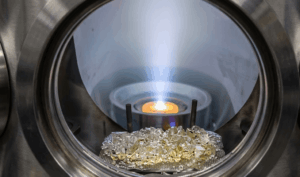
Every modern optical system relies on the subtle physics of thin-film interference achieved through precision coating layers. While optical coating software can effortlessly generate ideal spectral curves using measured refractive indices, translating theoretical recipes to physical hardware is where optical engineering meets material science. In thin-film deposition, coating performance is strictly bounded by the intrinsic chemical, mechanical, and optical properties of the selected materials.
Balancing Operational Trade-offs
Selecting the right combination of high-, intermediate-, and low-index materials requires far more than matching n and k parameters across a target wavelength band. A coating engineer must continuously balance a complex matrix of operational trade-offs:
- Transmission & Absorption: Working in the deep ultraviolet (DUV) or far-infrared (IR) regions severely restricts material choices, forcing trade-offs between wide-bandgap fluorides, resilient oxides, and high-index semiconductors.
- Laser-Induced Damage Threshold (LIDT): High-power pulsed and CW laser applications require materials with wide bandgaps, low intrinsic defect densities, and high thermal conductivity to resist catastrophic dielectric breakdown.
- Thermo-Mechanical Stress. Intrinsic film stress and mismatched coefficients of thermal expansion (CTE) relative to the substrate can cause cracking, crazing and delamination, substrate figure distortion.
- Environmental Stability: Immunity to spectral response shift caused by ambient humidity uptake requires dense, amorphous microstructures typically achieved through ion-assisted or sputtering processes. These high-energy processes also promote strong, adherent, and abrasion-resistant coatings.
Whether engineering a basic anti-reflective (AR) stack or a complex multi-layer dielectric coatings, success hinges on understanding how intrinsic material properties and associated deposition processes work in concert to produce the required optical and mechanical properties.
Standard Optical Coating Materials and Primary Applications
Most precision optics stacks rely on a short list of well-characterized materials. Each material earns its place for its distinct optical and physical properties.
- Silicon dioxide (SiO₂): The refractive index is ~1.46 at 550 nm. It provides a durable, amorphous, low-index coating with high environmental and moisture stability.
- Titanium dioxide (TiO₂): Thin-film refractive index ranges from 2.3 to 2.5 depending on packing density and deposition technique (such as Ion-Assisted Deposition).
- Tantalum pentoxide (Ta₂O₅): Index ~2. It exhibits lower absorption and lower scatter than TiO₂, making it the preferred high-index choice for high-power laser damage thresholds and narrow bandpass filters in visible to SWIR (450 nm to 3000nm) wavelengths.
- Magnesium fluoride (MgF₂): Refractive index sits near 1.38 in the visible spectrum, and its wide bandgap allows efficient transmission down into the vacuum ultraviolet range (~120 nm). Requires high substrate temperatures to achieve mild abrasion resistance.
- Zinc sulfide (ZnS): This specific range (0.4 to 14 µm) refers to multispectral ZnS (such as Cleartran, IR refractive index ~2.1). Its Knoop hardness (~160–240 kg/mm²) is relatively low compared to oxide materials like fused silica or sapphire.
- Germanium (Ge): With a high refractive index (around 4.0 in the infrared) is used for thermal system optics coatings in the 3–5 µm (MWIR) and 8–12 µm (LWIR) bands.
- Aluminum oxide (Al₂O₃): Its refractive index sits in the intermediate index range (~1.63–1.77, depending on thin-film density). Provides high mechanical hardness and good environmental stability. It is frequently used as an adhesion layer (binding difficult coatings to and as a protective hard overcoat.
Purity matters as much as the chemical choice itself. Trace contaminants can cause spitting, scatter, and absorption. Typical purities for common optical coatings is 99.9% (3N). Laser coatings and applications that require minimum absorption specify 5N purity.
How Refractive Index Contrast Dictates Spectral Performance
Spectral performance depends directly on index contrast. A large refractive index ratio between high and low materials requires fewer layers. Fewer layers reduce chamber runtime, lower film stress, and increase production yield. A narrow index ratio forces you to stack more layers to reach the same performance.
Useable transmission range is a primary parameter in material choice. Titanium dioxide provides excellent visible performance but absorbs heavily in the mid-infrared spectrum. Zinc sulfide and germanium replace oxides for these longer wavelengths. Material absorption becomes critical in high-energy applications, where trace losses convert into defects that limit LIDT.
Dispersion in refractive index influences design behavior across broad spectral bands. Materials with steep refractive index variation complicate broadband precision optics designs. This shows up clearly in antireflection coating design and in multi-layer designs.
Durability, Adhesion, and Environmental Survivability
Field environments punish optical coatings that look perfect in the benign laboratory environment. Salt fog, humidity cycling, thermal shock, and sand abrasion test durability and survivability properties determined by material, design and deposition parameters.
Unbalanced thermal expansion coefficients mechanically strain coatings during temperature swings. This stress can cause cracking or delamination months after deployment. Adhesion can fail at the substrate interface or inside the film structure.
Soft materials require protective barriers. Infrared zinc sulfide coatings frequently require a hard overcoat such as diamond-like carbon. Fluorides offer good ultraviolet transmission but are soft and exhibit porosity and high moisture sensitivity.
Film density and microstructure are equally critical, as porous layers frequently lead to yield-destroying defects.
Qualification testing including adhesion, humidity, and abrasion requirements defined in MIL-SPEC and ISO standards should shape your material list from day one.
Coordination Between Your Requirements and Equipment Capabilities Insures High Production Yield
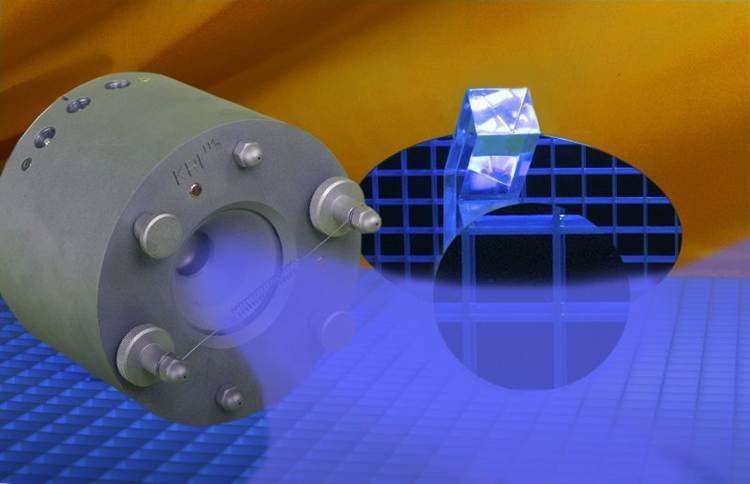
Production process capabilities can be optimized for a specific application, yet remain flexible to accommodate requirement evolution. Coatings that are based on high-density, low-loss optical films demand energetic deposition techniques, including ion-beam sputtering or ion-assisted deposition. At Tecport Optics, we construct equipment around functional requirements. This involves aligning our control systems, tooling, and source setups directly with your production materials.
To help engineering teams establish reliable production recipes instead of relying on guesswork, we offer application-specific configurations through our coating systems and solutions alongside dedicated process development support.
Whether evaluating material configurations for a new deployment or troubleshooting an active production line, get in touch with our team to collaborate on a solution.
Frequently Asked Questions
How should optical coating materials be stored between runs?
Store hygroscopic materials like fluorides in a dry cabinet or desiccator. Moisture absorption causes material spitting and unstable deposition rates. Label and track inventory lots to trace deposition failures back to specific material sources.
Can fluorides and oxides run in the same optical coating chamber?
Yes, but cross-contamination presents a genuine risk to your process. Fluoride residue on chamber walls and tooling degrades subsequent oxide runs. Dedicate specific crucibles and liners to single materials, or isolate chambers by material class.
Does my substrate limit which thin-film coating materials I can use?
Yes, substrate selection heavily restricts your thin-film material options. Polymer and cemented optics limit process temperatures, ruling out dense, high-temperature oxide recipes. Mismatched thermal expansion coefficients also narrow material choices on thick or oversized substrates.