
Off-the-shelf optical components are often quick and convenient, but when performance, precision, and efficiency are paramount, a one-size-fits-all approach inevitably falls short. Modern applications demand tailored solutions where every lens, filter, and coating is engineered to work in harmony. Similarly, coating systems are designed, constructed and dedicated to specific coated production that satisfies required optical, physical and environmental requirements.
Whether you need to optimize a specific wavelength, reduce form factor, or survive extreme operational conditions, custom process design provides advantages not available in off-the-shelf coatings. In this article, we explore why customization has become the gold standard in optical coating system design, and how tailored optics transform complex engineering challenges into market-leading products.
Off-the-Shelf PVD Optical System Limitations
While generic, general-purpose setups for Physical Vapor Deposition platforms are widely accessible and suffice for basic tasks, precision optics demand a far greater level of capability.
Conventional chambers feature rigid architectures that restrict the dimensions of processable substrates. Since tooling setups are seldom adjustable, facilities managing intricate or diverse component shapes face significant manufacturing bottlenecks.
Furthermore, standard PVD platforms lack essential process flexibility due to predetermined source layouts and traditional deposition processes. Modifying these fixed configurations to add advanced processes technology requires expensive retrofits.
Common limitations include:
- Fixed chamber dimensions that cannot accommodate large or irregularly shaped substrates
- Limited compatibility with advanced techniques such as ion-assisted deposition or reactive sputtering
- Inadequate monitoring interfaces for tight spectral tolerances
- Reduced scalability when production volumes shift
Responding to Specific Spectral Requirements
Each optical application imposes distinct spectral demands. Bandpass filters utilized in imaging sensors require completely different parameters compared to anti-reflection coatings engineered for laser optics. Each spectral region, and its associated substrate materials, requires different specific processes and coating materials.
Coating materials determine the selection of the correct deposition technique and dictate its parameters such as deposition rates, layer thickness monitoring, and substrate temperatures. Ultimately, a deposition platform engineered precisely for a target wavelength spectrum will regularly surpass the performance of a generic, all-purpose system.
Development timelines are shortened when a machine is engineered to support a process from day one. This setup means engineers spend less time and effort trying to adapt their process to the constraints of the hardware and coating technicians have an easier job with production.
Additionally, custom-built systems allow process engineers to integrate necessary tools from the very beginning. Components like gas delivery systems, optical monitoring hardware, quartz crystal monitors, ion sources and control programming can be fully configured to match the intended process, reducing the need for workaround solutions.
Process Engineering in Optical Coating System Design
Process engineering is an integral component of a production coating system. A well-designed chamber will support repeatable, stable runs across many production cycles.
Purpose-built coating systems allow precise control of key variables. Substrate rotation speed, source-to-substrate distance, and plasma parameters can all be dialed in during the design and development phases. These factors directly affect film uniformity and overall optical output.
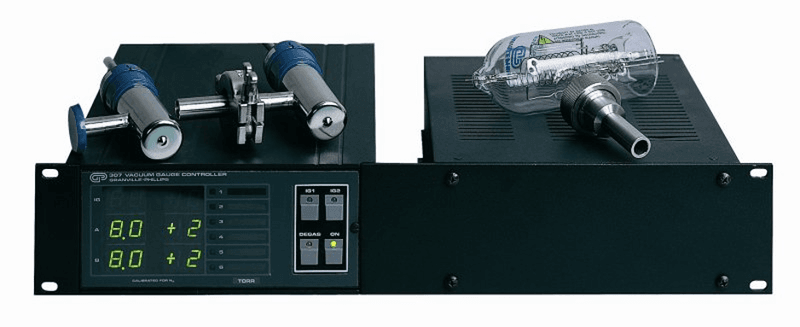
Tight quality tolerances pose significant challenges for aerospace and defense components, where batch-to-batch coating variations can disrupt quality control. Deploying hardware that is precisely matched to the target process effectively mitigates this risk.
Furthermore, embedding diagnostic instrumentation directly within the system chamber architecture offers distinct advantages. Incorporating real-time optical monitoring enables operators to actively observe layer thickness throughout the deposition cycle, an integration that is far less complicated to execute in a custom build than as a retroactive upgrade to a legacy system.
Design and Build In the Flexibility and Adaptability
A coating system and production process can be designed to satisfy a specific set of requirements associated with special optics. As requirements such as coating design involving layer or materials, environmental and size evolve or change with customer requirements, a coating system that is flexible provides maximum efficiency at minimum upgrade cost.
Modular architectures allow chambers to accept different source arrangements. Vacuum infrastructure can be scaled to accommodate higher throughput. Electrical and gas line planning can be pre-engineered for future upgrades.
This forward-thinking philosophy protects capital investment. A facility does not need to procure new equipment each time a process requirement shifts. The original platform can adapt with the operation.
Adaptability also extends to support. Engineers who design a system from scratch understand its architecture deeply. They can provide far more targeted technical guidance than a distributor of commodity equipment.
Benefit from System Building Experience
At Tecport Optics, our engineering team works directly with coating engineers, R&D directors, and lab managers to understand your spectral targets, substrate constraints, and volume requirements.
Our platforms support a wide range of advanced techniques, including IBS, PAD, PECVD, and DLC processes. Each one is configured to deliver production-ready results from the moment of installation, with no lengthy ramp-up period.
If your current equipment is holding your process back, it may be time to explore what a purpose-built solution can do. Connect with our team to start a conversation about your next system.