
Precision optics applications demand exceptional coating quality. The presence of coating defects directly impact optical performance and product reliability. Coating defects can be classified according to their internal and surface sources. Defects can originate from multiple sources during the coating process. Potential sources are substrate contamination, inadequate surface preparation, deposition process method, and equipment malfunctions.
Coating defects have an influence on scatter, optical absorption, and mechanical properties such as stress levels. For example, embedded particulates can become the focus of stress concentration that produces cracking and delamination. Particles and nodules growing from them are centers for lowering laser damage threshold. Environmental influences, humidity and temperature, might also interact in detrimental ways.
Understanding defect formation mechanisms is critical for effective quality control. This article examines the primary root causes of coating defects. We explore proven solutions and best practices for minimizing optical performance degradation.
By implementing systematic defect prevention strategies, manufacturers can significantly improve yield rates. Enhanced quality control procedures reduce costly rework and material waste. This comprehensive guide provides actionable insights for achieving superior coating quality.
Particulate Contamination: Sources and Control
Surface micro-particles are common defect sources in thin film deposition. They can come from the environment, the substrate, fixtures, or the chamber itself. Particles can include flakes, dust, ejection from materials sources, and even hair or skin. They become more likely as the number of process steps and layers increase. High-sensitivity precision optics applications rely on cleanroom-level environmental and inspection controls.
Contamination control succeeds when it is treated as a system, not a single “wipe down” step. Shields, shutters, and other line-of-sight surfaces can become particle collectors and sources over time. Shield design, as well as the ease and frequency of cleaning or replacement, are preventative maintenance steps toward controlling particle counts. This is especially true when maintenance intervals are set by observed buildup rather than a fixed calendar.
- Control the clean room environment. Define gowning and airflow rules appropriate to the optic’s defect sensitivity. Keep packaging closed until the last responsible moment.
- Control the touch points. Use dedicated carriers, limit rework handling, standardize gloves and tools, and design fixtures so parts are not slid across surfaces.
- Control the chamber particle sources. Treat shields, shutters, and fixtures as consumables with inspection criteria; clean or replace them before flaking starts, not after.
Micro-particulate ejection frequently occurs during thermal and e-beam evaporation processes. Selection of the material form is important; for example, meltable or pre-melted starting forms are preferred. Alternatively, particulate contamination is less likely from sputtered targets.
Potential Defect Generation With Plasma Processes
Reactive processes that include plasma often generate localized nodules, macroparticles, or subtle absorption and scatter during periods of instability. Reactive sputtering is particularly prone to arc discharge because the target surface can partially react in the presence of a reactive gas. This creates regions with different electrical properties, charge buildup, and resulting arc formation. Those arcs can be strong enough to cause local evaporation and eject macroparticles, destabilize process parameters, and even damage the target.
Plasma Instability and Arcing Mitigation in Reactive Processes
Arcing mitigation is essential to ensure high yield and surface quality control. Pulsed DC approaches can mitigate arc formation by reversing the target potential positive for short intervals, many thousands of times per second. This draws electron current and neutralizes charge buildup on the target surface. Instrumentation that prevents arcing conditions before it occurs is a necessity in modern optical coating.
Substrate Handling and Chamber Cleanliness Protocols in Precision Optics
Fingerprints, micro-scratches, and fixture rub marks introduced during cleaning and handling become nucleation sites for surface contamination, pinholes, nodules, or adhesion loss and scatter.
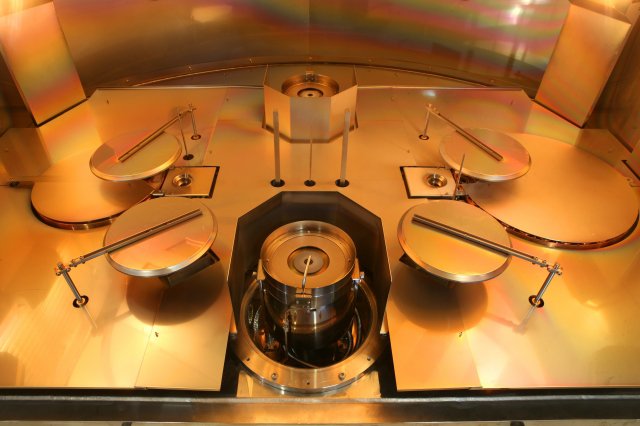
Chamber cleanliness degrades with use. Particles can originate from the environment or from previous production steps. Layered workflows create more opportunities for particle introduction. Shield design, cleaning frequency, and shield replacement are specifically identified as primary tools for preventing particle contamination in thin-film processes.
Protocols that tend to hold up under schedule pressure are the measurable ones. Define acceptable visual conditions for shields and fixtures, and document cleaning methods that do not introduce fibers. Add inspection gates tied to the most sensitive products rather than treating all runs the same.
Process Monitoring and Diagnostics for Root Cause Detection
Visual, microscopic, and spectral inspection protocols are in place to detect coating defects. Environmental testing per MIL-STD requirements often reveals defect influences that are not otherwise obvious.
Turn Defect Data Into a Stable Coating Process
Reducing defects in precision optics is ultimately a system engineering problem that ties together chamber preparation, condition, cleaning and handling procedures, and closed-loop quality inspection. An established inspection protocol will be used to identify problems.
Tecport Optics designs, manufactures, and services state-of-the-art thin-film vacuum deposition systems globally. Based in Orlando, Florida, we support thin-film coating operations through equipment, subsystem upgrades, and process improvements to ensure repeatable, high-quality production outcomes in precision optics.
Ready to stabilize your coating process? Contact our engineering team today to discuss how we can reduce your defect rates and improve production consistency.