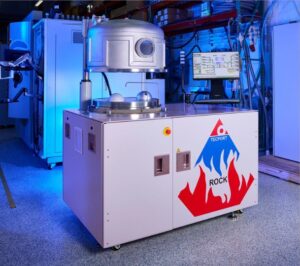
Process stability and throughput rarely fail because of a single bad run. They slip when the chamber is undersized for the load, the vacuum train cannot recover fast enough, temperature drifts between batches, or automation cannot repeat the same sequence every time. In vacuum coating technology, a custom chamber is less about fitting a bigger part and more about controlling the physics that drive repeatability.
A well-engineered chamber turns variables into parameters. That means predictable pumpdown and recovery, controlled thermal behavior at steady state, and fixturing that keeps deposition geometry consistent from the first substrate to the last.
Designing for Substrate Size and Batch Volume
Start with the substrates, not the sources. The maximum part size sets the chamber envelope, but batch volume defines everything else: fixture diameter, rotation style (single-axis, planetary, or multi-planetary), part spacing, shadowing risk, and line-of-sight to sources. If the design target is throughput, the critical metric is often qualified area per cycle, not just chamber diameter.
Geometry decisions directly influence uniformity and stability. Longer source-to-substrate distances can smooth thickness gradients. However, they also reduce deposition rate at the part and increase sensitivity to chamber wall conditions. Larger fixtures increase mass and surface area, which impacts pumpdown and thermal equilibrium. So the chamber design should include realistic estimates of outgassing load and heat capacity for the worst-case batch.
Load-locks and staging can be a throughput multiplier when the product mix supports it. Keeping the process chamber under vacuum while loading and unloading in a separate volume reduces contamination risk. It also decouples pumpdown time from coating time, but only if conductance paths, gate valves, and handling clearances are engineered as a single system.
Pump Selection and Vacuum Coating Technology Components
Pump choice should follow the process window. Target pressure and contamination tolerance determine the architecture more than ultimate base pressure. Many deposition tools use a dry primary pump paired with a turbomolecular pump for high vacuum, selected for low hydrocarbon backstreaming risk and stable performance across varying gas loads. Conductance is equally important: an oversized pump connected through a restrictive line behaves like a smaller pump.
Components must support control, not just evacuation. Throttle valves, properly placed gauges (Pirani, capacitance manometer, and ion gauges as appropriate), and repeatable valve sequencing are what make pumpdown time consistent shift to shift. For high-volume production, service access to foreline traps, valves, and gauges should be treated like a design requirement.
Key engineering questions to lock down early include:
- What is the maximum expected gas load during deposition and during recovery, including process gases, water vapor from parts, and any intentional bleed?
- Determine the required pumpdown time to the process start pressure. What conductance limits exist between chamber, baffles, and pumps?
- What monitoring is needed to detect drift quickly, such as rate and thickness sensing, pressure stability checks, or residual gas diagnostics?
Thermal Management Strategies
Thermal stability is a chamber-level problem. Substrates see heat from sources, plasma or ion assist, radiant heating from shields, and conduction through fixtures. At the same time, the chamber walls and shields act as both sinks and radiative boundaries, so their temperature history influences the next run.
Good thermal management begins with defining what “stable” means for the process. Substrate temperature uniformity across the load, time to reach steady state, and allowable drift during long cycles. From there, engineers can size heaters, specify sensor placement, and design shields and water-cooled boundaries.
Thermal design also affects throughput in practical ways. Faster stabilization and predictable cooldown reduce idle time between batches. Well-planned cooling circuits help avoid mid-run trips from flow or overtemperature interlocks. In many chambers, a modest redesign of shields, fixture materials, and coolant routing delivers more stability than simply increasing heater power.
Automation and Robotics Integration
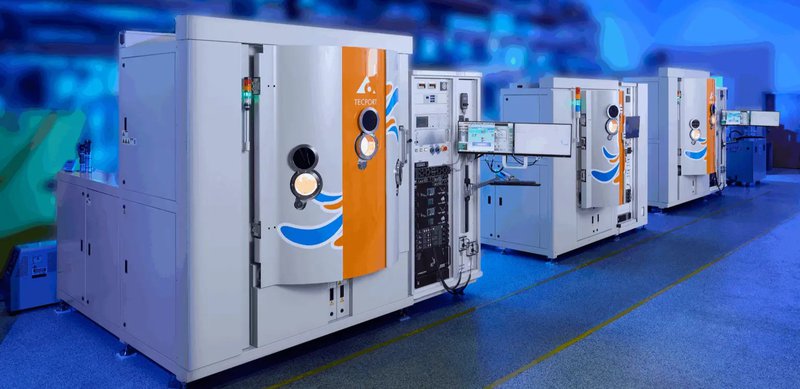
Automation is how a chamber remembers the process. Repeatable pumpdown sequences and data logging reduce operator-to-operator variability and make root cause analysis faster when yields dip. Interlocks should be engineered for safety and uptime, with clear fault states and diagnostics that minimize mean time to recovery.
Robotics and handling integration should be approached as a contamination and repeatability upgrade, not just a labor reduction. Consistent part orientation, controlled touch points, and minimized exposure time improve uniformity and reduce defects. The mechanical design must also be compatible with automation from day one, including access envelopes, fixture kinematics, and sensor placement.
Automation features that tend to improve both stability and throughput include:
- Recipe-driven sequencing for pumpdown, gas control, deposition steps, and shutdown, with permissions and change tracking.
- Integrated diagnostics and trend logging for vacuum levels, temperatures, rotation, and deposition sensors to detect drift early.
- Remote monitoring and robust service modes that support maintenance without re-qualifying the full tool.
Engineering a Chamber You Can Run for Years
Long-term throughput depends on serviceability and upgrade pathways, and those should be designed at the same level as uniformity. Tecport Optics builds custom thin-film vacuum deposition systems and supports subsystem upgrades to keep production tools aligned with evolving requirements.
Tecport also offers retrofit and upgrade solutions that emphasize modular, plug-and-play automation control intended to reduce downtime and simplify modernization of existing coating systems.
If you are evaluating a new chamber build or planning vacuum coating technology modernization, ask for an engineering review focused on stability drivers first. Start that review with Tecport Optics so your next chamber is engineered for qualified output per day, not just installed capacity.