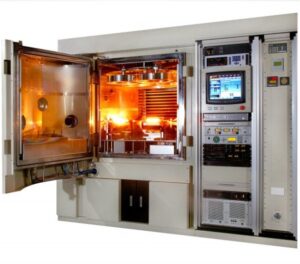
Electron beam (e-beam) guns are essential for manufacturing precision in optical coating. From anti-reflective to dichroic filters, these systems enable the high-quality thin-film deposition demanded by modern applications. E-beam evaporation delivers the precise control required for increasingly sophisticated coating specifications. I am the
Yet equipment performance directly depends on proper maintenance. Common challenges—including filament degradation and contamination buildup—reduce coating uniformity and compromise vacuum chamber integrity. Neglecting e-beam gun upkeep leads to defects, inferior coatings, and costly downtime.
This article explores e-beam gun fundamentals and proven maintenance best practices. Industry professionals will discover actionable strategies for maximizing equipment lifespan, ensuring superior optical coating quality, and optimizing operational profitability. By understanding how these systems work and following established protocols, manufacturers can achieve consistent excellence in optical coating processes.
E-Beam Evaporation Fundamentals for Optical Coating
In e-beam evaporation, a filament commonly generates electrons through thermionic emission. High voltage accelerates the electrons, and magnetic fields steer them onto the source material in a water-cooled hearth or crucible. The beam locally heats the charge to form a melt pool. The resulting vapor travels through a vacuum and deposits on substrates in a line-of-sight geometry. This is why fixturing, rotation, and planetary motion matter for uniformity.
From a process standpoint, the e-beam gun is a power-delivery device. Film deposition systems typically control film thickness and deposition rate with in situ metrology, such as quartz crystal monitoring (QCM), using closed-loop control. Rate stability is critical for optical stacks because small rate excursions can shift optical thickness. QCM controllers exist largely because deposition rate versus source drive power can be variable in thermal and e-beam evaporation.
Material Compatibility and Crucible Strategy
Material compatibility in e-beam is usually less about whether a material can be evaporated at all. It is more about whether it evaporates cleanly, without spitting, decomposition, or contamination from liners and hardware.
Multi-pocket crucibles and either direct-cooled or contact-cooled crucible concepts are often used to support sequential material changes without venting. This is a practical requirement for multilayer optical work.

Key compatibility considerations that prevent yield loss include:
- Charge density and trapped gas. Low-density or porous oxide charges can “spit” as trapped gas expands during heat-up. A longer rise-and-soak behavior is commonly used to outgas the material before opening the shutter.
- Melt behavior and fractionation. Some materials can dissociate or exhibit directional, time-varying vapor streams, which can show up as rate noise or tooling-factor drift if the QCM line-of-sight changes.
- Crucible liner exposure. Underfilling can expose liners and increase the risk of damaging liners or changing thermal conditions at the melt edge. Thus, managing fill level is a real hardware-protection step, not just a metrology detail.
- Thermal management and cleanliness. Water cooling is fundamental to keeping heat localized at the source and limiting radiative heating of the chamber. Meanwhile, poor thermal contact or inadequate cooling can destabilize evaporation and increase contamination risk.
Beam Stability, Control, and Multi-Source Integration
Beam stability depends on predictable emission, stable high voltage, and repeatable beam steering, since beam deflection errors can move the hot spot and change melt pool geometry and vapor direction. Practical systems often include a rotary, multi-pocket crucible with position recognition. The correct pocket is indexed reliably for the selected material. This reduces cross-contamination and shortens changeover time inside the same pumpdown.tecportoptics+2
Multi-source integration commonly means a combination of (1) multi-pocket selection for sequential layers and (2) additional sources for co-evaporation, with QCM monitoring used in situ to track deposition rate near the substrate. When co-depositing or switching sources, QCM tooling factor sensitivity becomes more visible because geometry changes can alter what the crystal “sees” versus what the substrates receive.
Preventative maintenance is what keeps beam stability from degrading into chronic arcing, drift, and downtime, and it should be planned around the gun’s high-voltage safety requirements and consumables such as filaments. A maintenance routine that directly supports repeatable optical performance includes:
- Verify cooling performance. Confirm water flow and temperature stability. E-beam sources are water-cooled, and cooling problems can drive instability and heat load into the chamber.
- Maintain consistent charge practice. Keep a consistent fill level so the QCM line-of-sight and tooling factor do not shift between runs as the pocket empties.
- Control warm-up and shutter events. Watch for QCM transients when the shutter opens, since heat bursts can be misread as deposition. It can confuse early-stage control segments.
- Inspect after service work. Check beam deflection at low energy after electrical or mechanical work. Cabling or pass-through issues can alter beam steering behavior.
- Use appropriate PPE and lockout. High-voltage isolation, discharge practices, and eye protection are standard requirements around e-beam evaporation hardware.
Keep Your E-Beam Source Production-Ready
If your e-beam gun shows rate noise, spitting-related defects, or frequent consumable changes, you can usually restore stable optical output fastest by conducting a structured review of source hardware condition, cooling, indexing, and control-loop behavior. Tecport Optics designs, manufactures, services, and upgrades thin-film vacuum deposition systems for demanding precision optics, including custom PVD platforms that integrate multiple sources and process engineering support.
Start a system-readiness conversation with Tecport Optics to evaluate e-beam source health, plan preventive maintenance, and explore integration options that match your throughput and stack requirements.