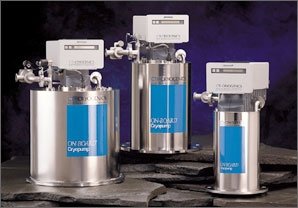
Choosing the right vacuum pumping technology is critical to the daily performance and operational efficiency of optical coating vessels. High-vacuum optical deposition systems rely primarily on two dominant technologies: cryopumps and turbomolecular pumps. While both achieve ultra-high vacuum (UHV) levels suitable for precision optical deposition, they operate on fundamental physical principles that dictate their evacuation characteristics, gas handling capabilities, utility demands, and maintenance cycles.
Core Operating Principles and Water Vapor Dynamics
Water vapor represents the dominant residual gas contaminant in vacuum enclosures. It readily adsorbs to internal chamber surfaces, fixtures, and optical substrates, desorbing gradually to govern base pressure long after roughing operations conclude.
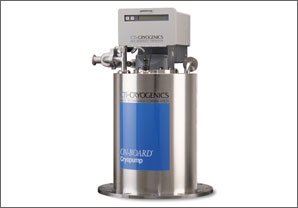
Cryopumps (Capture Pumping) function by arraying cryogenically cooled surfaces (down to ~10–15 K) that condense and freeze ambient gases. At the ~80 K radiation shield level, moisture is immobilized instantly. The pumping speed for water vapor on a cryopump can be several times higher than its rated speed for nitrogen, making it historically preferred for high-surface-area thermal evaporation chambers.
Turbomolecular pumps (Kinetic Pumping) utilize high-speed rotating momentum transfer blades to impart directional impulse to gas molecules, driving them continuously toward a backing port. Unlike capture devices, the water vapor pumping speed of turbomolecular pumps closely mirrors their nitrogen speed. However, they deliver consistent, continuous throughput without mid-run saturation, maintaining identical pumping dynamics from the start to the end of long deposition runs.
To optimize cycle times, physical vapor deposition (PVD) platforms frequently combine high-speed evacuation with surface mitigation techniques, such as load locks, thermal baking shrouds, and dry nitrogen purges, rather than relying solely on raw pumping velocity.
Maintenance Requirements and Operational Continuity
The fundamental mechanical distinction between capture and kinetic pumping directly governs service schedules and system uptime.
Cryopump Operational Demands
Since cryopumps retain trapped molecules internally, they require periodic thermal regeneration to desorb accumulated gases. This process involves heating the cold head, purging the vessel, and re-cooling, resulting in planned production downtime. High-throughput argon processes, such as magnetron sputtering, saturate cryopump arrays rapidly and accelerate regeneration frequency.
- Routine Maintenance: Compressor adsorber replacement, scheduled thermal regeneration, cold head overhaul (typically every 10,000–20,000 hours), and cooling water quality monitoring.
Turbomolecular Pump Operational Demands
Since a turbomolecular pump continuously exhausts process gases downstream into a foreline, it operates indefinitely without regeneration downtime. Operational attention focuses instead on mechanical wear components and backing system integrity.
- Routine Maintenance: Rotational bearing inspection/replacement (every 1–4 years depending on lubrication type), oil/grease reservoir servicing, periodic rotor balance checks, and backing pump oil changes.
Shared preventative maintenance for both architectures includes foreline trap cleaning, ionization gauge calibration, and system helium leak testing. Consistent logging of ultimate pressure and pump-down curves is essential for identifying degradation prior to failure.
Vibration Profiles and Substrate Sensitivity
Precision optical monitors, quartz crystal microbalances (QCM), and fragile substrate mounting structures react differently to mechanical resonance.
- High-Frequency Vibration: Turbomolecular pumps operate at rotational speeds ranging from 24,000 to 90,000 RPM. This high-frequency signature can be isolated using flexible edge-welded bellows, damped mounting structures, or modern magnetically suspended (mag-lev) bearings, which virtually eliminate contact-induced vibration.
- Low-Frequency Vibration: Cryopump displacer mechanisms operate at roughly 1 to 2 Hz. This low-frequency pulse transmits easily through rigid vacuum manifolds and can cause minor internal pressure fluctuations.
Broadband coating processes easily tolerate minor mechanical noise. However, demanding applications like narrowband bandpass filter deposition require layer control down to single-angstrom tolerances, making low-noise monitoring signals a primary selection driver.
Gas Compatibility and Facility Infrastructure
Facility infrastructure and gas loads often dictate hardware suitability, particularly in high-density or cleanroom environments.
| Factor | Cryopump Systems | Turbomolecular Pump Systems |
|---|---|---|
| Power Consumption | High (5–7 kW continuous per compressor) | Low (minimal power draw at terminal speed) |
| Cooling Requirements | Dedicated closed-loop water cooling for compressor | Air-cooled or low-flow water cooling |
| Argon Handling | Rapid capacity saturation; frequent regeneration required | Continuous throughput; zero saturation |
| Reactive Gases | Traps oxygen and reactive species internally | Direct downstream foreline evacuation |
Since continuous argon loading and reactive gas injection shorten cryopump run cycles, high-rate sputtering systems predominantly utilize turbomolecular pumps. Conversely, high-vacuum thermal evaporation applications favor cryopumps for their exceptional water vapor speed.
Optimizing Vacuum Architecture
No single vacuum technology holds absolute dominance across all optical coating platforms. System integration must align with specific deposition techniques, duty cycles, gas loads, and facility constraints.
Tecport Optics designs custom vacuum deposition systems engineered around specific production workflows rather than off-the-shelf configurations. By tailoring pumping architectures, integrating turbomolecular pumps, cryopumps, or hybrid pumping arrays with inline water traps, we optimize throughput across Ion Beam Sputtering (IBS), Plasma Assisted Deposition (PAD), PECVD, and Diamond-Like Carbon (DLC) platforms.
Complete system retrofits, installation support, and process training ensure production readiness for new and pre-owned systems alike.
Talk to our engineers about your pumping requirements and request a consultation with Tecport Optics before you finalize your next chamber specification.
Frequently Asked Questions
Can a single deposition vessel integrate both a cryopump and a turbomolecular pump?
Yes, hybrid configurations are widespread across modern optics facilities. Specific installations utilize a turbo for reactive process gases while employing a cryopump for moisture extraction.
Alternative setups isolate individual units using high-vacuum gate valves during targeted protocol steps. The supplemental architectural complexity proves worthwhile when an individual mechanism cannot service every phase of a production run.
What backing pump model pairs effectively with a turbomolecular pump?
Dry scroll and multi-stage roots mechanisms represent optimal choices for optical manufacturing environments. They eliminate hydrocarbon backstreaming risks historically associated with oil-sealed rotary vane pumps. Sizing capacity remains critical. An undersized backing mechanism restricts turbine throughput and elevates foreline pressure beyond safe operating thresholds.
Does a Meissner trap influence the primary hardware selection decision?
It alters system design significantly. A Meissner coil or cryogenic surface condenses atmospheric water at rapid speeds directly inside the main chamber. Integrating one enables a modest turbo apparatus to reach target base pressures swiftly without demanding massive cryopump capacity. Numerous coating facilities deploy the trap as a cost-effective intermediate solution.