Over the last twenty years, the manufacturing landscape for thin film coating has evolved dramatically. Sectors such as defense, aerospace, and precision optics have seen a quiet revolution as manual techniques give way to sophisticated, software-led automation. This transition is fundamentally redefining the ways in which engineers generate, track, and verify coating outcomes.
In this article, we explore the transition from human-centered hands-on deposition management to computer-controlled automation systems. We also highlight how robust data logging supports quality control and how digitized workflows allow for the high-volume, high-standard production demanded by contemporary industry.
The Era of Manual Operator Control
In the early days of vacuum deposition systems, human operators bore the brunt of process responsibility. Technicians relied heavily on their own intuition and professional experience to manually manage source timing, shutter controls, and sequencing.
With human interaction can respond to deviations in the process. Total reliance on hands-on control by experienced operators can create a critical issue with variability; even with repeated procedures, identical targets and materials, different runs often yielded inconsistent results. Factors such as human reaction times and attention lapses led to coating errors that could have significant repercussions in high-precision sectors like aerospace optics.
Inaccurate coatings resulting from human error can have severe consequences, particularly within high-precision fields like aerospace optics. To mitigate these risks, As a measure of reducing or eliminating human error, modern thin film technology has transitioned away from manual step management in favor of comprehensive computer-based process control systems. These platforms utilize programmable recipes to orchestrate source and shutter timing, pressure and temperature control and layer sequencing according to the programmed design recipe.
Transitioning to Integrated Software Control
By adopting this integrated approach, manufacturers ensure that every process is executed with total consistency, shifting the operator's role from manual control to high-level software supervision. Key benefits of this shift include:
- Automation through recipes. Engineers can pre-program every stage of production, eliminating the need for real-time operator monitoring and intervention.
- Flexible hardware support. The software architecture allows for the addition of new sources, pumps, and instruments without requiring a system overhaul.
- External access and monitoring. System parameters and deposited thickness can be tracked and modified remotely, allowing oversight from outside the cleanroom.
Crystal thickness monitor controllers can be programmed to execute a complete coating run including mechanical, thermal and pressure control according to the prescribed layer recipe.
The Role of Data Collection and Logging as a Quality Foundation in Thin Film Coating
The broad integration of process data logging represents a major step forward in thin film technology. Manufacturers can now archive and monitor every critical parameter during a run, including deposition rates, source power, and pressure levels. This permits diagnostic trouble shooting.
This record-keeping serves two purposes. First, it supports QA/QC workflows by giving quality teams a detailed trail to review whenever a part fails inspection. Second, it enables process repeatability by establishing a verified baseline that engineers can return to after maintenance, personnel changes, or equipment swaps.
- Run data acquisition and export tools allow engineers to compare current runs against historical benchmarks
- Process simulation and offline optimization tools let engineers refine a recipe before it ever touches a production substrate
- Automatic film termination and output curve control reduce reliance on subjective operator judgment at critical deposition endpoints
Without comprehensive data logging, repeatability becomes a goal rather than a guarantee. With it, manufacturers can trace the exact conditions that produced any given coating result.
Transitioning to Scalable Production via Thin-Film Coating Automation
Transitioning a coating developed experimentally to a production-ready process does not always proceed smoothly. Complete and accurate data metrology during the deposition process from pump down to venting is essential. The goal is to evolve to production capacity without compromising quality standards. The incorporation of computer control simplifies the evolution effort.
By adopting automated systems, manufacturers can effectively decouple production volume from process inconsistency. The integration of Industry 4.0 advancements, such as edge control, digital twins, and inline metrology, into vacuum deposition environments allows for faster responses to bespoke coating demands. Furthermore, implementing intelligent supervisory process control has been demonstrated to boost thin-film production throughput while also lowering total energy consumption.
Developing an Automation Strategy with Tecport
Automation establishes the necessary infrastructure to achieve and maintain the rigorous tolerances required by the aerospace and defense industries. Unlike manual methods that often falter, these automated systems ensure consistent precision throughout every production cycle.
Transitioning from legacy manual systems does not necessitate the purchase of entirely new machinery. Tecport Optics provides upgrade and retrofit solutions designed to transform current coating systems into automated control platforms. These solutions utilize off-the-shelf components and a plug-and-play architecture, ensuring a straightforward installation process and sustainable long-term serviceability.
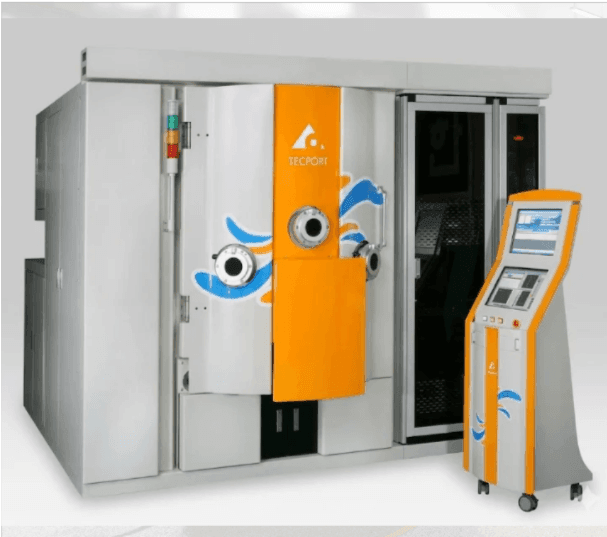
For facilities building from the ground up, Tecport's Symphony line integrates the OPUS process control platform, delivering recipe management, data logging, report generation, and remote access in one unified interface. Reach out to the Tecport team to discuss where automation can strengthen your coating operation.