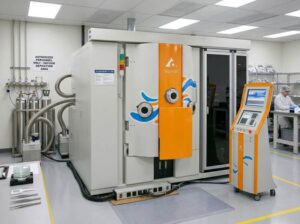
Mature technicians provide invaluable experience in process parameter and control during R & D and production phases. Extensive procedure documentation is essential to preserve the process knowledge gained in the event of personnel or equipment changes. Industry 4.0 provides a structured approach for thin film deposition and optical coating processes documentation by emphasizing comprehensive data logging.
Automating data collection converts tribal knowledge into objective assets, tracking key parameters such as temperature and pressure to eliminate guesswork. This digital transformation shifts labs from reactive troubleshooting to data-driven, predictive optimization, ensuring processes are repeatable, traceable, and teachable.
The Hidden Costs of Uncodified Expertise in Thin Film Deposition
Relying on operator expertise to perform an undocumented procedure creates potential operational risk. Government contracts require established procedure documentation to be in place during production and failure diagnostic phases. Without codified procedures, variations between shifts and long-term process drift become difficult to diagnose, as troubleshooting relies on subjective memory rather than objective data. Automated parameter logging mitigates these challenges by capturing high-resolution telemetry, enabling teams to pinpoint the root causes of failures, track subtle equipment wear, and ensure consistent, repeatable process control.
A Complete Coating System Includes Process Parameter Logging
Process parameter logging follows the script of the deposition procedure. A modern control system records active parameters continuously and their event time. This continuous capture generates a complete digital fingerprint of each run, mapping the exact physical conditions inside the chamber.
A robust logging framework typically records:
- Vacuum profile: base pressure, pump-down curves, and real-time process pressure fluctuations.
- Thermal history: substrate temperatures during the ramp, soak, and cooldown phases.
- Rate and thickness: instantaneous deposition rates, cumulative thickness, and active tooling factors per layer.
- Source parameters: power, current, voltage levels, and discrete arc counts for each active source.
- Gas and plasma conditions: mass flow controller setpoints versus actual delivery, alongside ion source telemetry.
- Metadata: operator identities, active recipe versions, and specific fixture configurations.
Tracking recipe versions turns your digital log into a controlled document for strict quality management. Matching metadata to process outputs allows you to prove exactly which parameters produced a specific customer lot. This traceability eliminates ambiguity when auditing historical runs or replicating successful batches.
Different thin film deposition processes demand distinct data priorities based on their deposition technology. Ion beam sputtering requires tight rate control and long-term beam stability over extended runs. Reactive plasma processes rely on high-accuracy gas ratio logging to maintain stoichiometry. A diamond-like carbon system requires precise bias voltage and precursor gas tracking to consistently produce the specified film hardness. Each documentation and logging protocol is specific to each of the coating processes, thus providing traceable engineering and diagnostic insights.
Leveraging Digital Run Logs for Faster Process Troubleshooting
Automated data logging pays for itself the first time a process deviates from standard specifications. When a coating fails its spectral specification in a paper-based lab, the investigation disintegrates into guesswork and finger-pointing. In a logged facility, engineers immediately pull the digital run file and overlay it against a verified golden run.
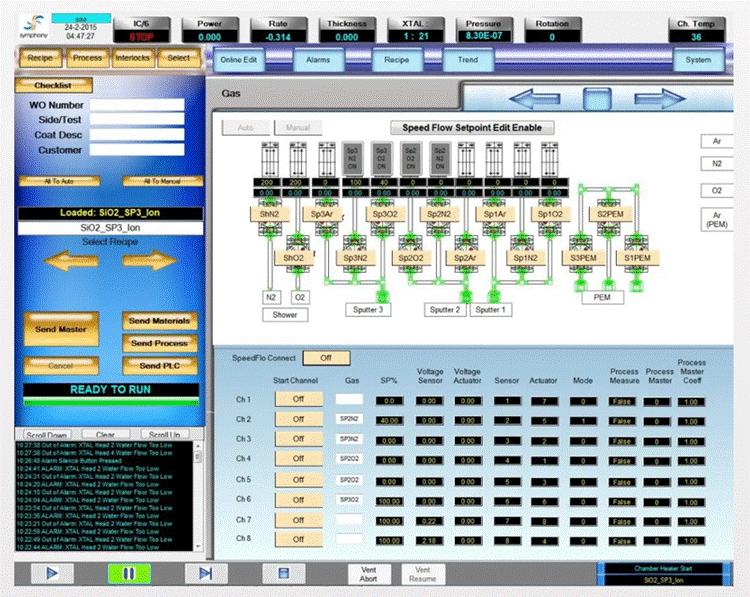
Symphony Opus is user-friendly operator interface for complete process automation and data analysis.
Most equipment and process failures reveal themselves quickly through visual trace comparisons. You can instantly see if the base pressure sat two decades too high due to a leaking seal, or if the deposition rate wandered during layer eleven. The logs will also show if the substrate temperature failed to reach the required soak threshold, pointing your team toward a clear corrective action.
Comparing data across multiple manufacturing campaigns unlocks even deeper diagnostic power. Plotting ninety sequential runs of the exact same recipe makes outliers jump out immediately, allowing you to identify correlation instead of coincidence. You begin to see if failures cluster directly after routine maintenance, spike on high-humidity days, or occur only when using one specific substrate fixture.
This data-driven visibility also gives legacy machinery a productive second life. Plenty of mechanically excellent vacuum chambers currently run blind because their control packages predate modern data handling protocols. Choosing to retrofit and upgrade adds advanced sensors, a modern Programmable Logic Controller (PLC), and a robust logging interface without the massive capital expense of replacing sound structural hardware. The chamber stays in production, but control is gained over the process and procedure.
Building a Verifiable Audit Trail for Defense and Aerospace Buyers
Aerospace and defense customers do not just buy a physical coating; they buy the empirical evidence supporting its quality. Rigorous frameworks like AS9100 demand strict traceability, configuration change control, and objective proof of stable process control. Automated data logging delivers this comprehensive documentation directly, shifting the regulatory burden from manual paperwork to verified system procedure documentation.
Digital logs allow you to tie a serialized optic to its exact chamber environment and runtime conditions years after delivery. First Article Inspection (FAI) cycles accelerate because the required supporting data already lives in your database. When a deviation occurs, your corrective action reports rely on hard data points rather than subjective operator memories.
This level of documentation also provides a significant commercial advantage during contract bidding. Statistical Process Control (SPC) requires deep population data, and continuous logging feeds those analytical engines. Once you calculate clear Cpk values for critical thin film deposition parameters, you can definitively defend your manufacturing capability claims during a strict audit or a competitive bid review. Your qualification cycles shorten, customer trust builds, and repeatable defense orders follow.
Operational security must accompany this increased connectivity to protect proprietary defense and commercial data. Logged process variables must remain inside secure, controlled enterprise networks with strict user access permissions and defined data retention rules. Integrating your coating equipment into an Industry 4.0 framework does not require exposing your critical infrastructure to external security risks.
Optimising Advanced Coating Equipment and Solutions for High-Yield Production
Our engineering team builds custom vacuum platforms with automated data logging integrated directly into the core system architecture. Every Tecport Optics platform, from our Symphony Precision series to our advanced plasma and DLC systems, ships with robust recipe control and parameter capture engineered specifically around your target films. We also engineer field retrofits, allowing your existing legacy chambers to seamlessly join the exact same modern data ecosystem.
Since 1997, our specialists have supported coating engineers through rigorous qualifications, production scale-ups, and complex aerospace audit preparations. Our operational philosophy centers on long-term partnerships. Review our full range of coating equipment and solutions to examine exactly how each platform manages high-resolution process monitoring.
If your coating lab still relies on operator instinct and handwritten paper logs, you risk falling behind modern quality standards. Contact our team today before your next qualification deadline.
Frequently Asked Questions
How long should a coating lab retain thin film deposition run data?
Data retention timelines depend entirely on your specific quality management system and binding customer contracts. Many aerospace and defense suppliers mandate record retention for the entire operational life of the component plus several additional years.
What is the ideal sampling rate for thin film deposition parameter logging?
A one-second sampling interval provides sufficient resolution for most optical coating and thin film deposition processes. Implementing faster sampling rates helps engineers detect rapid micro-arc events or monitor exceptionally short, high-rate layer transitions. Conversely, slower sampling rates risk missing the transient voltage fluctuations or pressure spikes that explain unexpected film failures.
Does automated data logging slow down vacuum coating production throughput?
Automated data logging executes in parallel with your primary PLC control loops and adds zero cycle time to your manufacturing runs. The primary risk to operational efficiency is not system lag, but rather leaving captured data unanalysed. True throughput gains occur when your team uses these digital footprints to shorten troubleshooting cycles and eliminate expensive repeat runs.