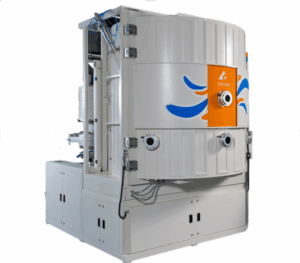
Optimizing legacy hardware is a critical challenge for facilities reliant on established vacuum systems. As industry standards for film quality and throughput evolve, operators must determine the most viable path forward to maintain competitive manufacturing capabilities. This decision requires a nuanced evaluation of whether a systematic retrofit or a complete replacement of the thin film deposition infrastructure offers the best long-term value.
Determining the Path: Retrofit Versus Replacement
The fundamental decision-making process hinges on the structural integrity of the existing system. When the core vacuum vessel and primary mechanical assemblies remain robust, a retrofit is often the most prudent course of action. This strategy addresses specific points of obsolescence within control interfaces, instrumentation, or source modules. Conversely, if structural degradation, internal corrosion, or insurmountable geometric constraints impede performance, a complete replacement becomes inevitable.
When evaluating your current thin film deposition assets, consider the following signals:
- Indicators for Retrofit: These include the increasing scarcity of spare parts, legacy control software that is no longer maintainable, or persistent repeatability issues that are clearly linked to electronic instrumentation rather than the physical vacuum environment.
- Indicators for Replacement: These include situations where the chamber cannot achieve necessary pressure, contamination, or uniformity benchmarks, even after upgrading the source modules.
Investment decisions should prioritize risk reduction and total capacity over simple capital expenditure. Modern control architectures are frequently justified by significant improvements in run-to-run repeatability and the ability to detect process drift early through advanced statistical process control techniques.
Integrating Advanced Sources
Upgrading source modules offers a direct pathway to enhanced film properties without altering the physical footprint of the tool. However, successful integration relies on the chamber possessing the appropriate ports, clear line-of-sight, and sufficient utility infrastructure to support the new hardware.
The addition of plasma sources during thin film deposition necessitates a thorough assessment of gas delivery stability to mitigate unintended coating or sputtering on critical internal surfaces. Similarly, ion beam modules introduce complex integration requirements, specifically concerning beamline alignment and the influence of ion energy on film stress. In many legacy systems, the primary challenge is not the source technology itself but managing the secondary effects. This encompasses a variety of technical considerations:
- Managing material redeposition patterns.
- Protecting sensitive viewports and internal sensors.
- Ensuring long-term serviceability for routine maintenance cycles.
Before initiating hardware modifications, a comprehensive plan must define exactly what performance improvements are required. If the objective is to achieve denser films, confirm whether the limiting factor is the energy at the growth surface or the precision of thickness termination, then select the upgrade that directly addresses that root cause.

Modernizing Controls and Enhancing Throughput
Control system modernization represents the highest-leverage upgrade, as it profoundly impacts safety interlocks, data traceability, and overall process reliability. Older systems often rely on a spectrum ranging from manual control to rudimentary automation. In contrast, modern thin film deposition systems emphasize repeatable execution, robust data logging, and sophisticated fault response mechanisms.
Upgrading these systems provides an opportunity to standardize operator workflows, minimize reliance on tribal knowledge, and transition to predictive, usage-based maintenance. You can best realize throughput improvements by reducing non-deposition time and minimizing rework, rather than by forcing higher deposition rates that may compromise film quality.
Common strategies to improve efficiency include:
- Optimizing Cycle Times: Shortening pumpdown and stabilization durations through improved valve sequencing and high-precision gauges.
- Enhancing Recipe Consistency: Improving control over setpoints and providing real-time trend visibility, allowing operators to intervene before process drift occurs.
- Increasing Effective Capacity: Modifying internal fixturing, such as implementing higher-density substrate carriers or upgrading rotation and heater assemblies.
- Refining Workflows: Streamlining load and unload procedures and replacing manual panel steps with intuitive, automated operator interfaces.
Effective ROI analysis should account for the reduction in scrapped lots and the elimination of complex, intermittent faults. Quantifiable data and consistent control logic minimize the time lost to diagnostics, which is frequently a major hidden cost in aging thin film deposition platforms.
Expertise in System Evolution
Tecport Optics specializes in supporting retrofits that target obsolete components, unsupported software, and limited hardware availability, which are the primary drivers for modernizing legacy thin film deposition infrastructure. Our approach to retrofitting focuses on integrating plug-and-play automation control options designed to interface with a wide range of existing coating systems. By utilizing modular hardware and software, we create flexible environments capable of accommodating future technical requirements.
If your facility is currently evaluating the merits of retrofitting versus replacement, or if you are scoping the addition of plasma or ion beam modules, it is essential to begin with an engineering review of your existing constraints and success metrics. A phased upgrade plan will ensure that your equipment remains fully qualified and production schedules are protected.
To develop an upgrade strategy that aligns with your specific chamber architecture and production targets, reach out to Tecport Optics to map a custom retrofit path for your equipment.