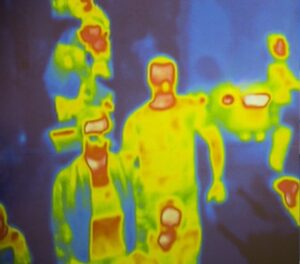
In both night vision and thermal imaging sensors, thin-film optical coatings serve as the primary gatekeepers of performance. It determines how much signal is transmitted, how much stray light is suppressed, and how stable the system remains across fluctuating temperatures and harsh environments. While night vision typically targets the visible to near-infrared spectrum and thermal systems focus on longer wavelengths, they share a common physical constraint: every uncoated surface reflection and every bit of scatter erodes contrast and narrows the detection margin.
The Physics of Transmission and Contrast
At a system level, optical coatings are far from cosmetic. They are functional components of the optical train. Anti-reflection (AR) coatings are applied to substrates specifically to increase throughput and mitigate reflection-driven artifacts. Without these layers, internal reflections can create ghost images and veiling glare. These both drastically reduce the modulation transfer function (MTF) of the system.
For thermal imaging sensors, designers must account for specific atmospheric transmission windows, primarily the 3 to 5 µm (MWIR) and 8 to 14 µm (LWIR) bands. Since these windows are narrow relative to the full infrared spectrum, the coating’s spectral design must precisely match the passband to prevent transmission loss and contrast degradation.
Strategic Roles of IR and Anti-Reflection Coatings
In low-light and low-contrast environments, the practical objective is to maximize useful signal while minimizing the internal noise floor. High-efficiency AR coatings improve the overall utility of the sensor by ensuring that the maximum number of photons reaches the focal plane array.
Key coating roles that directly support mission-critical performance include:
- Maximizing Optical Throughput: Reducing per-surface reflection losses preserves the integrity of the signal as it passes through multi-element lens assemblies.
- Stray Light Suppression: By eliminating internal reflections, coatings prevent the "washout" effect, thereby enhancing perceived contrast in total darkness.
- Spectral Selectivity: Beyond simple transmission, interference thin films act as precision selectors, defining the exact spectral channels required for complex thermal imaging sensors.
- Environmental Hardening: Coatings act as a barrier, protecting sensitive infrared substrates from humidity, salt spray, and abrasive particulate matter.
Coating Uniformity and Wavefront Integrity
Transmission efficiency is only one part of the equation. If coating thickness, refractive index, or internal stress varies spatially across an optic, the coating itself can introduce wavefront deformation. This link between coating non-uniformity and wavefront error is why image clarity is inextricably tied to process control. Two lenses may provide the same average transmission, yet produce vastly different image quality if one suffers from spatially varying coating-induced aberrations.
Several uniformity factors can degrade the performance of thermal imaging sensors:
- Thickness Gradients: Non-uniformity across the clear aperture shifts the local spectral response and introduces phase errors.
- Mechanical Stress: Spatially varying stress can physically distort the substrate, leading to localized wavefront changes that blur the image.
- Microstructure Scatter: Excess scatter originating from surface roughness or poor grain structure in the thin film reduces contrast, even when the average transmission remains high.
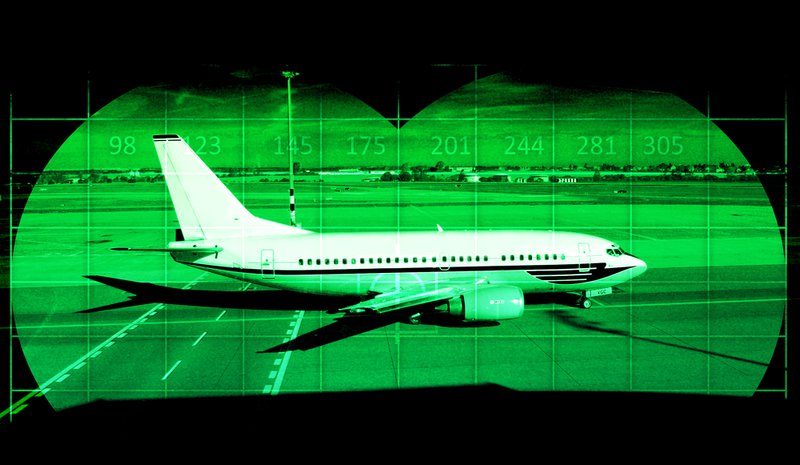
Durability in Mission-Critical Environments
Fielded optics are rarely used in laboratory conditions. They are exposed to extreme temperature cycling, handling, and environmental contamination. High-quality coatings bring value due to durability and resistance to physical damage. A coating that drifts in spectral performance over time or accumulates micro-scratches will eventually change the system's effective sensitivity.
In systems with numerous optical surfaces, even a fractional loss per surface compounds into a significant system-level penalty. For thermal imaging sensors, there is almost no margin for such variability. Any loss in transmission or increase in stray light translates directly into a reduced operational range.
Precision Engineering and Deposition Technology
When scaling optical components for night vision or advanced infrared systems, the choice of deposition platform is as critical as the thin-film design itself. Process engineering discipline ensures that the theoretical design is translated into a repeatable, high-performing physical product. Sophisticated deposition methods are required to achieve the level of uniformity and durability demanded by modern aerospace and defense standards.
Tecport Optics specializes in this intersection of design and execution. We design and manufacture custom thin-film vacuum deposition systems utilizing a wide range of advanced technologies, including:
- Physical Vapor Deposition (PVD)
- Plasma Assisted Deposition (PAD)
- Plasma-Enhanced Chemical Vapor Deposition (PECVD)
- Ion Beam Sputtering (IBS)
Our systems are also capable of producing Diamond-Like Carbon (DLC) coatings. This provides the extreme hardness and environmental resistance required for external-facing infrared optics.
Turn Coating Performance Into Field Readiness
The effectiveness of thermal imaging sensors relies on the invisible science of thin-film interference. By mastering the variables of thickness, material density, and environmental stability, optical engineers can push the limits of detection and identification in the field. Whether the goal is to increase the range of thermal sight or ensure the clarity of a pilot's night vision system, the coating process is the final, vital step in the manufacturing chain.
If your next optical assembly demands tighter uniformity, improved spectral precision, or enhanced environmental durability, Tecport Optics provides the technological foundation to succeed. Our team is ready to help you optimize your coating processes for the most demanding electro-optical applications.
Contact Tecport Optics to discuss your technical requirements and discover how our advanced vacuum deposition systems can elevate your optical performance.