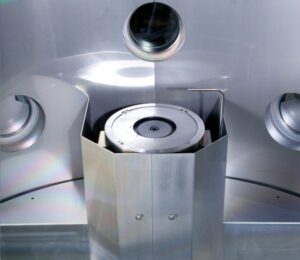
Modern optical systems rely on the precise manipulation of light to achieve high-resolution imaging, accurate targeting, and efficient energy transfer. At the heart of these systems lies advanced coating technology, a discipline that transforms standard glass surfaces into high-performance components by minimizing unwanted reflections. By managing the behavior of light at the interface of different media, these coatings ensure that the maximum amount of light reaches the intended sensor or eyepiece.
In complex assemblies where multiple lenses and prisms are stacked, the cumulative effect of surface reflections can severely degrade performance. This makes the application of specialized coatings a functional necessity rather than a secondary enhancement.
The Physics of Fresnel Reflections and Transmission
Every air-to-glass interface inherently produces Fresnel reflections. These occur due to the refractive index mismatch between the ambient environment and the optical substrate. Without mitigation, these reflections represent a loss of signal and the potential for internal stray light.
In high-precision assemblies, such as multi-element camera lenses or laser systems, these losses compound. For instance, an uncoated glass surface typically reflects about 4% of incident light; in a system with ten elements, this could result in a total transmission loss of nearly 40%.
Beyond simple transmission loss, reflected light often bounces between internal surfaces, creating ghost images and flare. These artifacts wash out contrast and obscure fine details in the imaging path. To combat this, coating technology utilizes the principle of thin-film interference.
By applying a dielectric layer with a specific thickness and refractive index, engineers can cause the light reflected from the top surface of the coating to be 180 degrees out of phase with the light reflected from the coating-substrate interface. This results in destructive interference, effectively canceling out the reflected energy and allowing it to transmit through the optic instead.
Design Architectures: Single-Layer vs. Multilayer
The choice between a single-layer and a multilayer design is dictated by the spectral breadth and the angle of incidence required by the application. While the physics remains consistent, the complexity of the execution varies significantly.
- Single-Layer AR Coatings: These are often based on the quarter-wave concept, where a single dielectric layer is deposited at a thickness of one-fourth of the target wavelength. While effective, they are inherently narrowband and perform best at a specific design wavelength and angle.
- Multilayer AR Coatings: To achieve low reflectance across a wide spectrum—such as the entire visible range or multiple infrared bands—multiple layers of alternating high and low refractive index materials are required. This sophisticated coating technology allows for destructive interference to occur across a broader range of wavelengths and angles.
- Environmental and Mechanical Considerations: Modern designs must also account for durability. The coating’s ability to withstand humidity, temperature fluctuations, and physical abrasion affect material selection.
Precision and Uniformity in High-Resolution Systems
In targeting systems and high-definition imaging, even a fractional percentage of residual reflection can lead to veiling glare. This reduces the signal-to-noise ratio. The precision of the deposition process is paramount because the performance of a multilayer stack is hyper-sensitive to the thickness of each individual layer. If a layer is off by just a few nanometers, the interference condition shifts, potentially moving the performance sweet spot outside of the required spectral range.
Uniformity is another critical factor. In large-aperture optics, the coating must maintain a consistent thickness from the center to the edge. Non-uniformity leads to varying optical performance across the surface, which can cause phase shifts and distorted wave fronts. Advanced coating technology utilizes high-speed substrate rotation and sophisticated monitoring systems to ensure that every millimeter of the optic meets the specified tolerance, thereby increasing yield and ensuring system reliability.
Production Realities and Process Control
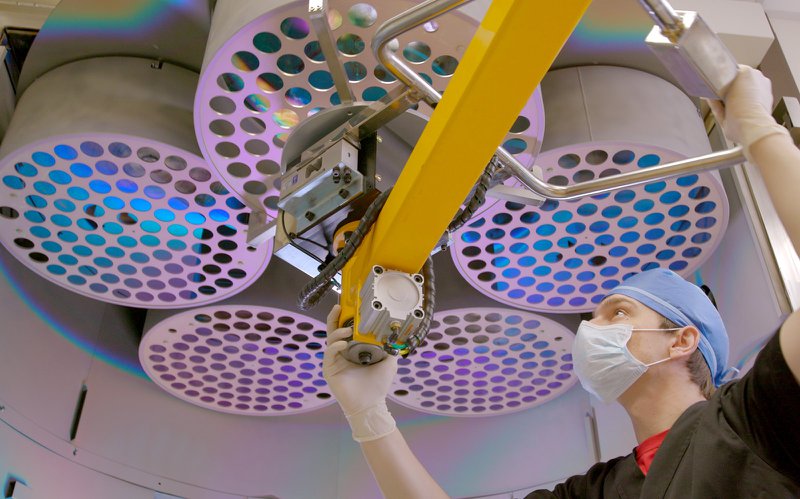
Moving a theoretical coating design into mass production requires a stable and repeatable deposition environment. For the most demanding applications, traditional thermal evaporation may be insufficient. Instead, methods such as Ion Beam Sputtering (IBS) or Ion-Assisted Deposition (IAD) are employed. These processes produce denser, more robust films with higher refractive index stability.
Key production factors include:
- In-situ Monitoring: Real-time optical or crystal monitoring allows technicians to adjust the process during deposition, ensuring that each layer in a complex stack reaches its precise design thickness.
- Repeatability: For industrial scaling, the process must produce identical results from one run to the next. This requires rigorous control over chamber vacuum levels, gas flows, and power settings.
- Stray Light Suppression: High-quality coating technology acts as the primary defense against internal reflections, providing the dark background necessary for high-contrast imaging in low-light environments.
Turning Coating Technology Into Production Reality
When an application demands tight spectral tolerances and exceptional contrast margins, the challenge shifts from design to execution. High-performance optics require a partner capable of scaling complex designs into repeatable, high-yield production cycles.
Tecport Optics specializes in bridging the gap between theoretical optical physics and industrial reality. By focusing on process development and the qualification of new deposition methods, we ensure that your optical components perform exactly as designed, regardless environmental complexity .
Our expertise encompasses a variety of assisted deposition methods, including sputtering technologies that provide the density and durability required for aerospace and defense applications. Tecport Optics facilitates the integration of advanced coating technology into your workflow, offering the flexibility needed to handle both rapid prototyping and full-scale production runs.
Optimizing Performance With Tecport Optics
The evolution of anti-reflective coatings has turned what was once a simple layer of magnesium fluoride into a highly engineered multi-layer system capable of near-zero reflectance. As optical systems continue to shrink in size while increasing in complexity, the role of precision coatings becomes even more vital to maintaining image integrity and system throughput.
At Tecport Optics, we provide the vacuum deposition systems and process expertise necessary to master these challenges. Whether you are looking to enhance an existing coating process or require a turnkey solution for a new, demanding optical specification, our team is ready to assist. Let’s connect to align your coating strategy with the next generation of optical performance.