The integration of advanced optical components into demanding environments necessitates a rigorous approach to thin-film resilience. In sectors such as aerospace, telecommunications, and defense, an optical coating is frequently the primary interface between sensitive instrumentation and harsh external conditions. Consequently, durability is not merely a secondary attribute but a fundamental performance requirement.
A coating that meets its spectral specifications upon exiting the vacuum chamber but fails after several thermal cycles or a single cleaning procedure is functionally obsolete. Engineering for longevity requires a comprehensive understanding of material science, deposition physics, and the specific failure modes associated with environmental and mechanical stressors.
Defining Durability Through Failure Modes
To achieve a resilient finish, engineers must first categorize the risks associated with the intended use case. Durability is an umbrella term encompassing a variety of physical and chemical resistances. Without a granular definition, systems may be over-engineered in areas that do not matter while remaining vulnerable to critical threats.
Common failure modes that impact performance include:
- Mechanical Degradation: Visible damage such as scratches, pits, or hazing caused by abrasive cleaning or airborne particulates.
- Spectral Drift: Shifts in center wavelengths or changes in reflectance/transmittance caused by moisture absorption in porous films.
- Adhesion Failure: Delamination or peeling of the film stack from the substrate, often driven by excessive internal stress or poor surface preparation.
- Chemical Corrosion: The breakdown of film layers due to exposure to salt spray, industrial solvents, or high humidity.
Stress Control in Multilayer Stacks
A primary challenge in maintaining a stable optical coating involves managing the elastic energy stored within multilayer stacks. As the number of layers increases to meet complex spectral requirements, the cumulative stress can exceed the bond strength between the film and the substrate. This stress originates from the growth microstructure during deposition, the thermal mismatch between materials with different expansion coefficients, and non-uniform ion bombardment.
To mitigate these risks, manufacturers utilize plasma and ion-assisted deposition (IAD) as engineering levers. By bombarding the growing film with energetic ions, the packing density of the material increases, which reduces porosity and improves hardness. This densification prevents the sponge effect, where a film absorbs atmospheric moisture and shifts its optical properties. Furthermore, careful control of the thermal budget—including substrate pre-heating and managed cooldown rates—is essential to prevent micro-cracking caused by sudden temperature gradients.
Strategies for Surface Protection
When designing for extreme mechanical resistance, engineers often distinguish between hard coatings and protective overcoats. While the terms are sometimes used interchangeably, they serve distinct strategic purposes in a thin-film design.
- Hard Coatings: These are dense, intrinsically robust functional layers, such as those produced via Ion Beam Sputtering (IBS). These films are characterized by high refractive index stability and superior abrasion resistance due to their amorphous, void-free structure.
- Protective Overcoats: This involve a sacrificial or specialized top layer, such as Silica ($SiO_2$), Alumina ($Al_2O_3$), or Diamond-Like Carbon (DLC). These materials are chosen specifically to withstand chemical solvents or physical wiping, shielding the more sensitive functional layers beneath.
Effective design often integrates both approaches. By utilizing a dense functional optical coating stack and finishing it with a chemically inert overcoat, the optic can survive frequent handling and cleaning without degrading the underlying interference pattern.
Qualification and Industry Standards
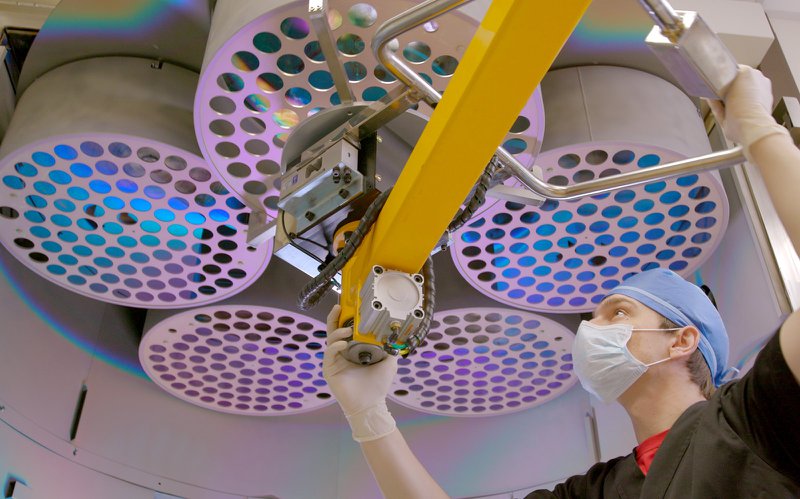
Validating the endurance of a coating requires adherence to standardized testing protocols. Qualification should be performed on both representative production parts and witness samples to ensure consistency.
- ISO 9211-4:2022: This standard outlines specific test methods for abrasion, adhesion, and water resistance. It provides a framework for sequencing tests to simulate the cumulative wear an optic might experience over its service life.
- MIL-C-48497A: Originally established for military-grade interference coatings in sealed systems, this specification remains a benchmark for minimum quality requirements, particularly concerning humidity and moderate abrasion.
A robust durability plan goes beyond the initial qualification. It involves closing the loop between environmental test results and vacuum process control. This includes monitoring deposition repeatability and managing potential drift across the life of the evaporation source or sputtering target.
Optimizing the Deposition Platform
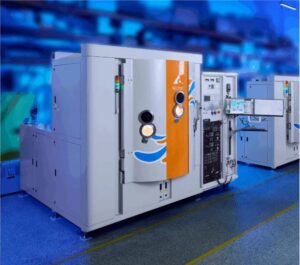
The path to a more durable optical coating is ultimately paved by the capabilities of the deposition hardware. Achieving the necessary film density and stress control requires a system designed for precision and energy management. Whether utilizing Physical Vapor Deposition (PVD), Plasma Enhanced Chemical Vapor Deposition (PECVD), or Ion Beam Sputtering, the equipment must provide a stable environment where ion energy and material flux are tightly regulated.
Ensuring that an optical coating can withstand the rigors of its application is a collaborative effort between optical designers and system engineers. By focusing on film microstructure, stress management, and rigorous qualification, manufacturers can prevent premature failure and extend the service life of critical optical assemblies.
Engineering for Longevity With Tecport Optics
Tecport Optics designs and manufactures thin-film deposition systems. This includes PVD, Plasma Assisted Deposition, PECVD, DLC, and Ion Beam Sputtering systems, with an emphasis on custom-built vacuum coating platforms matched to customer process and volume needs. Our systems are engineered to address the specific challenges of modern thin-film production, providing the tools necessary to balance high throughput with the uncompromising durability required by the aerospace and defense industries.
Ready to optimize your coating equipment strategy through denser films, better stress control, or more consistent environmental test performance? Let’s connect.