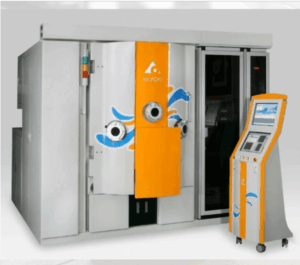
True production readiness in thin film deposition is defined by unwavering repeatability and the ability to maintain stringent specifications across rotating shifts, different operators, and planned maintenance cycles. When engineering teams falter during the transition from concept to manufacturing, the root cause is rarely a single, dramatic equipment failure. Rather, it is typically the gradual accumulation of minor gaps in planning. These often stem from incomplete lifecycle strategies, brittle automation architectures, or training programs that focus merely on operational basics instead of comprehensive system control.
Defining Production Readiness
True production readiness begins with the precise process window required for your specific application. In high-stakes environments like optics and aerospace, this requires stable uniformity and consistent run-to-run behavior under demanding throughput constraints. Achieving this level of reliability requires a shift in how you evaluate thin film deposition equipment.
A tool capable of factory-grade performance must adhere to three fundamental engineering principles:
- Repeatable Control Architecture: Control systems must prioritize stability. This includes consistent power delivery to sources and robust data logging designed for root-cause analysis rather than simple pass or fail indicators.
- Integrated Metrology: Treat process verification as a core system component rather than an add-on. Plan optical monitoring, rate control, and calibration routines around the practical realities of production schedules, tool qualification, and rapid changeovers.
- Designed Maintainability: Maintainability must be engineered with the same rigor as film performance. When service access, cleaning cycles, and part replacement protocols are improvised after installation, uptime becomes hostage to avoidable downtime.
Reliability Engineering: Maintenance and Lifecycle Planning
Predictive maintenance leverages equipment condition data to determine optimal maintenance timing, thereby minimizing unexpected failures and maximizing uptime. Real-time monitoring and advanced modeling approaches are essential, particularly when critical components exhibit failure patterns that do not align with rigid calendar-based schedules.
In the context of thin film deposition, condition data should be practical and accessible. Monitor trends such as base pressure recovery times, pump-down slopes, arc rates, valve cycle counts, coolant flow stability, and deposition rate drift. The objective is not to construct a perfect model, but to establish early warning signals that correlate directly with technician maintenance actions.
Furthermore, treat component lifecycle management as a critical discipline. While a vacuum chamber may remain viable for decades, the supporting electronics, sensors, and software stacks often have much shorter lifespans. Production readiness improves significantly when lifecycle risk is addressed explicitly through proactive parts availability, defined calibration intervals, and mitigation of planned obsolescence.
To operationalize these concepts without unnecessary complexity, teams should implement:
- A maintenance playbook tied to measurable performance triggers, featuring a defined list of critical alarms to protect yield.
- A lifecycle register for high-impact parts that tracks lead times, reliable alternates, and verified test procedures for post-replacement validation.
Modularity and Lifecycle Strategy
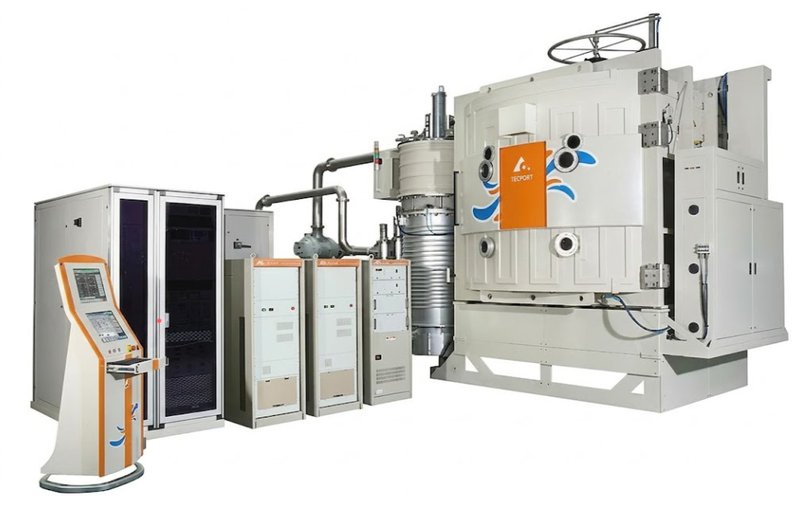
Modular chamber design isolates change, which is vital because production lines rarely remain static. As you introduce new substrates, layer stacks, or fixtures, a modular approach reduces risk and cost by minimizing the scope of rework and requalification. Modularity extends beyond mechanics to include software and subsystems, allowing for the integration of new sensors without requiring a total rewrite of the control layer. This flexibility is a hallmark of robust thin film deposition systems.
When deciding between a retrofit and a full replacement, view the choice as a strictly engineering decision. Replace the entire system when the chamber geometry cannot support your next process requirement or when systemic design limits your long-term output. Conversely, choose a retrofit when the core vacuum vessel and layout remain sound, but the controls, sensors, or subsystems have become bottlenecks.
Finally, never underestimate the power of comprehensive training. True process optimization requires building deep operator and engineer competence, ensuring your team knows how to adjust, verify, and recover the process.
Partnering for Success
If you seek a thin film deposition platform that is truly turnkey, evaluate your supplier based on their ability to deliver a comprehensive maintainability strategy, a long-term lifecycle plan, and a training path that protects your process window.
As a specialist in the design and manufacture of custom vacuum systems, Tecport Optics provides the expertise to bridge the gap between concept and reliable, factory-stable manufacturing. Whether you are scoping a new system build or looking to upgrade an existing platform to meet modern demands, we offer the process development, retrofit, and support services necessary to elevate your operations. Reach out to Tecport Optics to discuss your uptime targets and your long-term process roadmap.