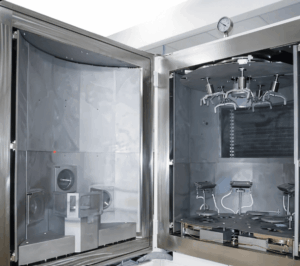
High-performance imaging systems ultimately succeed or fail based on the integrity of the optical coating stack applied to components. Precision in this domain requires more than just achieving theoretical spectral targets; it demands managing complex light interactions, minimizing stray reflections, and ensuring extreme stability across every surface within an optical train. For engineers, the challenge lies in translating ambitious system-level imaging requirements into robust thin-film specifications that production deposition processes can reliably maintain.
Optimizing Anti-Reflective and Filter Performance
Anti-reflective (AR) and filter coatings serve distinct functional roles, yet both face rigorous constraints. They must maintain predictable performance across varying angles of incidence, polarization states, and operational temperatures.
- AR Performance: Designers target minimal reflectance across a specific band to maximize light throughput. Successfully minimizing reflections suppresses ghosting and flare, which are essential for maintaining high image contrast.
- Filter Precision: Filter stacks, including bandpass, longpass, shortpass, notch, and neutral density, must precisely shape the transmitted spectrum. In many modern systems, the spectral accuracy and contrast of the final image rely more on these filters than on the sensor itself.
Key performance metrics for these stacks include spectral edge steepness, out-of-band blocking, and ripple. Designers must also account for how the optical coating tolerates the steep cone angles found in fast optics. Furthermore, maintaining film integrity is vital, as any drift in stress or adhesion can alter the surface figure or wavefront, directly degrading image quality.
Mastering Spectral Control and Stability
Spectral performance represents a significant process control challenge. Even a technically sound design can falter if refractive indices shift, packing density varies, or thickness control drifts between production runs. Imaging systems often amplify these minor variations, manifesting as problematic color mismatches, channel cross-talk, or reduced sensitivity, particularly when multiple coated elements interact.
To specify spectral control effectively without complicating the procurement process, engineers should:
- Define the passband center and bandwidth at the operational cone angle or stated angle of incidence, while specifying polarization conditions if necessary.
- Establish clear out-of-band blocking requirements and measurement ranges.
- Specify allowable spectral shifts following environmental stress, such as temperature cycling or abrasion, to ensure long-term reliability.
- Document substrate material and surface cleanliness, as contaminants and surface roughness can increase scattering and alter effective optical constants.
Achieving stable spectral performance requires a repeatable chamber environment, consistent pre-clean protocols, and advanced monitoring techniques. Utilizing real-time optical or quartz crystal monitoring significantly reduces run-to-run variation, especially for steep-edge filters where minor thickness errors cause noticeable shifts in spectral positioning.
Thickness Uniformity as a Performance Driver
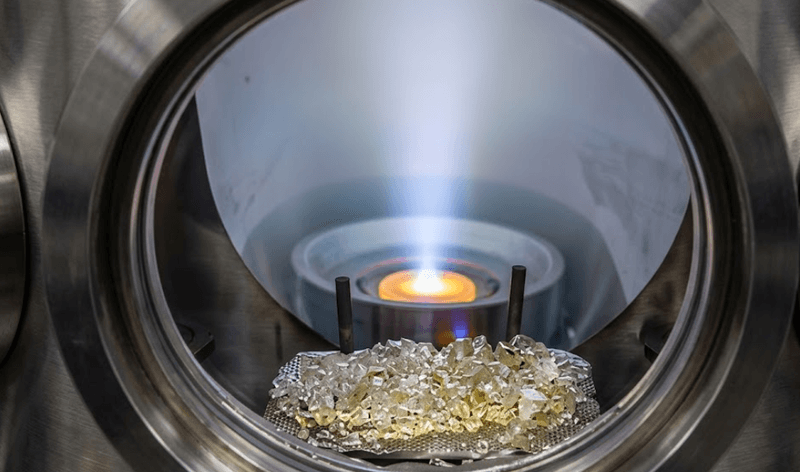
Thickness uniformity is the often-overlooked driver behind production yield. An optical coating may meet the mean thickness target while still failing if variations across the aperture introduce spectral shifts or wavefront errors caused by stress gradients. As parts increase in size or curvature, or as coating stacks become thicker, maintaining uniformity becomes progressively difficult.
System requirements that facilitate superior uniformity and repeatability include:
- Substrate Motion: Implement robust planetary rotation fixturing designed to minimize shadowing and maintain thermal equilibrium.
- Deposition Sources: Utilize stable sources with predictable angular distributions and the flexibility to tune those distributions for new part geometries.
- In-Situ Control: Employ real-time monitoring that tracks individual layer thicknesses rather than just total run time. This prevents the compounding of errors in multi-layer designs.
- Thermal Management: Regulate substrate heating and cooling cycles, as temperature significantly influences film stress, density, and refractive index.
Uniformity targets should map directly to performance. Expressing these as a percentage across a defined, clear aperture, paired with an allowed spectral shift at a critical wavelength, keeps the process focused on the functional needs of the imager.
Achieving Yield and Production Readiness
A successful yield strategy begins by defining the criteria for a compliant part and building a process that proves repeatability with minimal rework. The most frequent causes of yield loss include thickness or index drift, local non-uniformity, adhesion failure, and environmental sensitivity. These failure modes underscore the necessity for strict contamination control, repeatable source behavior, and precise metrology that identifies issues early in the production flow.
When scaling from development to volume production, consider the following approach:
- Design for Manufacturability: Select stacks that meet performance targets without extreme sensitivity to minor process fluctuations.
- Process Controls: Maintain rigorous chamber conditioning and utilize real-time monitoring to reduce layer-to-layer uncertainty.
- Inspection Workflows: Integrate metrology, such as spectral mapping and defect inspection, at key points to avoid unnecessary downstream labor.
The deposition platform is effectively an extension of the optical design. Advanced techniques like ion beam sputtering (IBS) provide the dense, stable films required for demanding filters, while various plasma-assisted processes enhance density and adhesion for specific applications. Choosing the right platform is fundamentally about balancing requirements for scatter, absorption, and repeatable optical constants.
Advanced Coating Solutions from Tecport Optics
The transition from lab-style prototyping to reliable, high-volume production requires intentional system engineering. Whether your program demands the extreme stability of IBS or the versatility of plasma-assisted deposition, the quality of your final imaging output is inseparable from the optical coating process.
Tecport Optics specializes in designing and manufacturing custom thin film vacuum deposition systems tailored to these specific imaging requirements. We engineer platforms for PVD, PAD, PECVD, and IBS to ensure your production line meets both the technical performance and volume demands of your most challenging programs. If you are preparing to scale your imaging technology, contact Tecport Optics today for a focused technical discussion on integrating high-performance systems into your workflow.