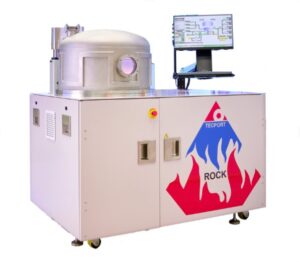
Modern manufacturing facilities are rapidly transforming. Standalone vacuum tools are evolving into sophisticated, interconnected production cells capable of sensing, deciding, and continuously improving their performance. This evolution represents a fundamental shift in how engineers manage the complex requirements of high-performance thin film stacks. The future of manufacturing relies on tight automation and intelligent control strategies that ensure repeatable success for any optical coating process at scale.
Industry 4.0 Integration for Manufacturing
The principles of Industry 4.0 emphasize interconnectivity, automation, and real-time data to bridge the gap between physical production and digital management. Within this framework, an optical coating system no longer acts as a solitary tool. Instead, it becomes a crucial node in a comprehensive digital thread that links incoming substrate metrology, recipe management, and final verification.
Successful integration starts with standardizing how the equipment publishes process context. Time-synchronized data—including deposition rate, thickness, temperature, and power—gains significant value when linked directly to specific lot identifiers. This traceability serves as the foundation for statistical process control, streamlined failure analysis, and confident scaling from development to full-scale production. By relying on concrete data rather than uncodified expertise, manufacturers achieve greater consistency across their operations.
Monitoring and Sensor Integration
Real-time monitoring elevates deposition from a best-effort endeavor into an engineering-controlled process. By observing drift while it remains correctable, operators can prevent failures before they occur. A common in situ sensor for thin film deposition is the quartz crystal microbalance, which monitors deposition rate and film thickness throughout the coating cycle.
A robust strategy often combines complementary sensors so one signal validates another during dynamic conditions. For instance, integrating both crystal monitoring and optical monitoring for evaporation control provides a tighter correlation between physical thickness and final spectral response. Key categories of sensor data include:
- Mass and thickness: Quartz crystal monitors provide reliable data for rate and thickness signals.
- Optical endpoints: In situ optical monitoring detects spectral targets and precise layer transitions.
- Vacuum and gas states: Multi-range pressure gauges and mass flow controllers confirm environmental stability.
- Thermal context: Substrate temperature and fixture behavior reduce variability related to loading effects.
- Source behavior: Real-time tracking of power, emission, and shutter timing detects drift before it compromises the optical coating quality.
Engineers focus on correlation to distinguish between recipe sensitivity and hardware health. When structured data allows for comparison across different lots and chambers, teams can quantify exactly which signals predict successful outcomes.
Closed-Loop Control and Intelligent Deposition
Intelligent manufacturing emerges when monitoring feeds a control loop that actively adjusts the process rather than simply recording it. In physical vapor deposition, closed-loop controllers manage rate and thickness automatically. This capability forms the backbone of modern, automated systems.
When paired with well-defined recipes and recovery logic, these systems correct for predictable disturbances—such as source drift or thermal transients—without human intervention. This data integration also transforms how teams approach process management. Advanced software provides robust data logging, automated report generation, and remote access, which operationalize process discipline across various shifts and sites. Consistent records enable the creation of practical models, including predictive maintenance triggers and automated pass-fail gates tied to specific process signatures.

The competitive advantages of intelligent optical coating systems include:
- Higher yields: Early drift detection leads to fewer undetected excursions and less scrap.
- Accelerated qualification: Shorter learning cycles shorten the time required to qualify new stacks.
- Enhanced consistency: Active enforcement of thickness and rate control ensures tighter lot-to-lot repeatability.
- Stronger auditability: Traceable process records satisfy the rigorous requirements of aerospace and defense supply chains.
- Operational flexibility: Stable control reduces reliance on operator-specific techniques.
Advancing to Autonomous Manufacturing
Transitioning from simple automation to autonomous production requires a strategic roadmap. Organizations should focus on instrumenting the process, integrating the data, and finally, closing the control loop. This approach ensures that the equipment works in harmony with the desired manufacturing flow.
Tecport Optics provides the tools necessary to achieve this level of precision. The Symphony Precision platform is engineered for complete process automation, featuring remote control, advanced trending, deep data analysis, and intelligent recovery workflows. For applications demanding superior film quality, Tecport also delivers advanced ion beam sputtering solutions equipped with broadband optical monitoring to enable highly flexible and reliable optical coating results. If you are ready to modernize your deposition platform, connect with us today to align technology with your production goals.